PĀVILOSTA
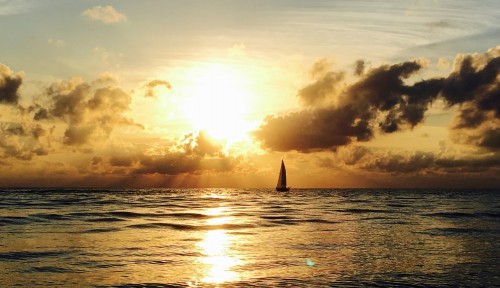
''Pāvilosta is like the border between the man-made world and the primeval forces of nature, authentic and true. Therefore, this place is much loved by people who are looking for true emotion, peace and tranquillity.
Walking along the sandy beach, the wind gets entngledin your hair, the salty sea air fills the lungs, and the heart starts to beat in one rhythm with the rustling waves.These feelings are so pure, simple and strong that you want to expierence them again and again.
Pāvilosta is like a potato, boiled with its skin, cottage cheese with onions and herring, as if is not much, but it is pure and true in everything.
In Pāvilosta everyone can find a way to mingle in the natural symphony, turning from a listener to a participant. From some it is the adrenaline you feel when testing your strength on a surf board, from some-joy and satisfaction for the fish caught, but those looking for real romance- go for a swim on warm July night under the starry sky.
Pāvilosta is like a real lady from Kurzeme ( Courland)- proud, stubborn and unique.''
/http://www.festivalszalaisstars.lv/
Have you ever gone along the street and suddenly realized that you have come to the sea-coast? If not, go to Pāvilosta or Āķagals as it was called earlier. They say that there are the most sunny days in the year. Through Pāvilosta the river Saka flows which is one of the shortest (only 6km) and deepest rivers in Latvia (in some places the depth reaches even 11m).
History of Pāvilosta
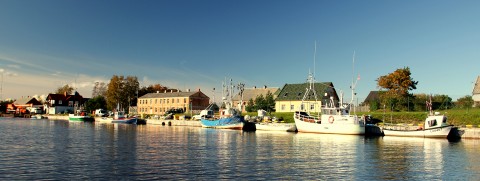
In 1879, the German baron Otto Friedrich von Lilienfeld founded a harbour and town here which was called in the name of his brother – Governor of Kurzeme Paul von Lilienfeld – Pāvilosta (Paulshafen). Pāvilosta was used to call Āķagals. In 1878, construction of bulwarks was started which cost 8 thousand golden rubles to Baron Lilienfeld. More rapid development of Pāvilosta began along with the construction of Liepaja Karosta which was started in 1893 and the stones of Pāvilosta and Saka were used in this construction work. At the turn of 19th and 20th centuries, construction of sailing ships started. 15 sailing ships were built in Pāvilosta and their farthest cargo shipment has reached the coasts of France and Spain. The fleet of sailing vessels and motor boats of Pāvilosta was badly destroyed by the fire of the First World War. Around 1935, fishermen joined together as a cooperative and having lived through the storms of the Second World War established a fishermen artel “Dzintarjūra” in 1947. Pāvilosta prospered and developed as a significant fishing harbour. A lot of population of Jūrkalne moved to Pāvilosta and found a job here. The “silver” taken from the sea turned into rubles. Houses were built, the streets were laid with asphalt and lighted, a new school and recreation centre were built and a fishing fleet was expanded to 17 vessels for the earned money. In 1974, the fishermen collective farm “Dzintarjūra” became a division of Liepāja fishermen collective farm “Boļševiks” according to the state policy. The changes brought by the awakening period have also affected Pāvilosta – the former fishermen collective farm was led to bankruptcy as a result of mismanagement, however, fishermen found their place – they started coastal fishing which was forbidden during Soviet times and renewed the motorboat fleet by purchasing them from the Gotland fishermen. But since 2000, SIA ”N-Stars” has been managing the former fishermen collective farm.
At the end of 2004, Saka region was established as a result of the merger of Saka parish and the town of Pāvilosta.
Since July 1, 2009, Pāvilosta region was made as a result of the merger of Saka region and Vērgale parish. We will further make common history of Pāvilosta region!
Pāvilosta Local History Museum
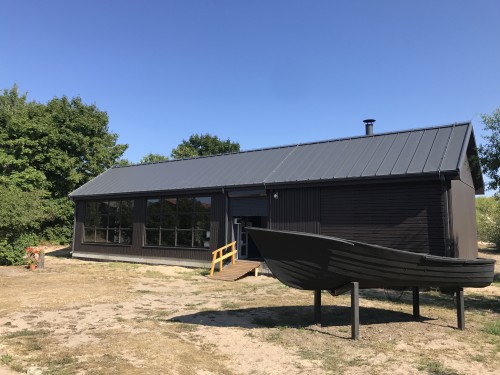
and The Boat house
Dzintaru iela 1, Pāvilosta
+371 63498276,+371 29226273
pavilosta.muzejs@tvnet.lv
The museum collection contains more than 10,000 artefacts, 790 of which are displayed for public viewing. The permanent exposition tells the history of Pāvilosta region.
Working hours:
15.09.-14.05. Mon-Fri 9:00-17:00,
15.05.-14.09. Wed-Fri 9:00-17:00, Sat, Sun 12:00-16:00
Entrance fee:
- EUR 1,50 for students;
- EUR 0,50 for pensioner, disabled people;
- EUR 2,00 for adults,
- Visiting the exhibition EUR 0,50
- guide service in the museum EUR 3,50- 7,00
- tours around Pāvilosta and the neighbourhood EUR 15,00 in hour
- exhibition space for rent - EUR 5,00 (one hour)
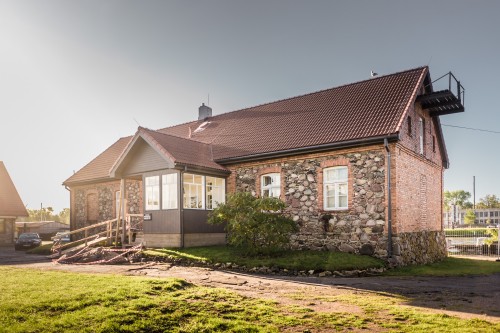
On 22 May 1879, the German Baron Otto Friedrich von Lilienfeld founded a harbour town, naming it after his brother Paul Lilienfeld, governor of the Courland Governorate – Paulshafen (later named Pavlovskaja gavan, Pāvilosta at present) and laid the foundation of the first brick building at Pāvilosta – a pilot house built from red bricks and rocks. From 1992, on the initiative of historian Orida Grīnberga, the building has been hosting the Pāvilosta local history museum, in which more than 10000 articles are displayed. The museum is proud of its many unique articles, which deserve to be seen; bronze Latvian brooches and belts made in the 18th century, items used for fishing, a piano made by the Riga craftsman Ludwig Theodor Aull "L. Th. Aull", made in the 1960s, one of the most ancient known works of art made by the craftsman, a folk costume of the Saka region, which won 1st prize in the competition of folk costumes of the XXIII Latvian General Song and Dance Festival held in 2003. In 2012, the attics of the museum were transformed into an exhibition hall.
The Boat House is located near the museum for displaying large exhibits. Once, a boat was kept inside the building used by the rescue team (the first team was set up in 1891) to rescue fishermen and mariners at sea. The team was led by an experienced fisherman, Otto Butlers, and later by Jānis Freimanis. They managed to rescue 118 fishermen and mariners. They were granted cash prizes and government medals for their work on multiple occasions.
The exposition "Pāvilosta gold sand grains"
An interactive exposition shows the development of the town in a hundred years, 1918 to 2018, with the cultural and historical events and stories.
The exposition "Fishermen's network House"
Exposition gives information about fishing traditions in Pāvilosta region and fisherman's tools. Special 3D glasses gives you the opportunity to see how fisherman catch fish in Baltic sea and Saka river.

Foot path ''Path in the Dunes''
The ''Lumstiņš'' weavers group consisting of seven weavers, upon implementing the project ''Path in the Dunes'' in the summer of 2015 invited everyone to weave the longest footpath in the district. It was all summer long, piece by piece, woven both by local and town visitors. Altogether, 190 people from Germany, Denmark, Sweden, England, Ukraine, France, Lithuania, The United States and from 32 different Latvian cities took part in the project. Also five newlyweds wove the footpath, thus immortalising their first joint work. The length of the footpath is 21.6m, and the width is 68 cm. The woven footpath can currently be seen in Pāvilosta local history museum.
.jpg)
Great Boulder (Sea Boulder)
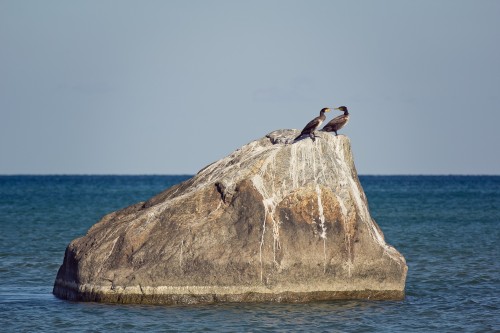
Fifty metres into the sea from the seashore, the waves bathe the Great Boulder (Jūrasakmens) of Pāvilosta - the largest sea boulder along the shore of the Baltic Sea in Kurzeme. It rises 3.5 metres above the ground (1.5 metres in water); its circumference is 15 metres. In Soviet times, this boulder served as a landmark because the civilians were permitted to move along the seashore from jetty Z up to the Great Boulder.
Pāvilosta jetties
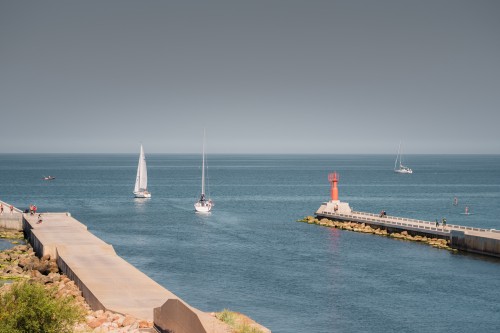
In the winter of 1878, the German Baron Otto Friedrich von Lilienfeld began the construction of two parallel jetties – the North jetty and the South jetty, at his own expense. The original harbour gate was made from the rows of piles and stone stacks piled on juniper branches. Stone stack piling was done by women. In 1929, the jetties were extended using concrete blocks. The length of the channel was 950 metres. However, the narrow entrance of the channel (52 metres) and the jetties built in parallel, made the vessel traffic difficult. In Soviet times, when the jetties were guarded by border guards, walks along them were prohibited. About ten years ago, there were no longer any bans; however, the stone stack had become dangerous for walks due to the impact of storms and ice movement. In 2010, the jetties were reconstructed; they are now safe for walks again. At present, the length of the North and the South jetties is 287 metres and 297.5 metres, respectively.
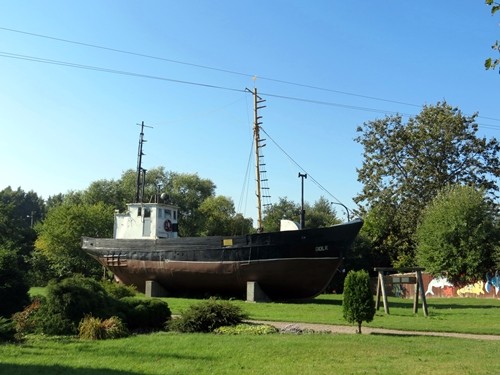
The vessel “Dole”
RB type fishing vessels dominated in the fleet of Pāvilosta fishermen collective farm "Dzintarjūra" in 1950-ties and 60-ties which were built in the German Democratic Republic (East Germany). Dimensions of the ship: length – 18.20 m, width – 5.22 m, height – 2.5 m. The ship was to Pāvilosta Local History Museum, and, owing to support of the State Culture Capital Foundation it was restored in 2005 and serves as a tourism object.
Nature reserve Pavilosta Grey Dune
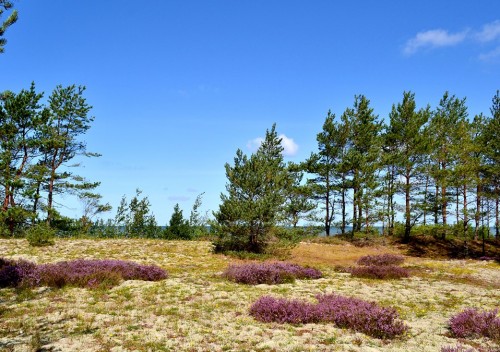
Grey dunes of Pāvilosta are one are one of the most varied grey dunes in Latvia – they are included in the list of EU protected biotopes. They spread to the north from the Saka mouth within the length of 1.5km and their width reaches 200, and even 740m in some places. The area of the Nature Reserve "Pāvilosta Grey Dune" is 42,5 ha. The Nature Reserve was established on October 30, 2007 so that to provide the largest grey dune in Latvia, a speciially protected biotope – a grey dune covered by caulescent plants, grey dunes with shrubbery stands, woody seaside dunes, dry heath of sand plains of the coastal lowland and protection of the specially protected species living there.
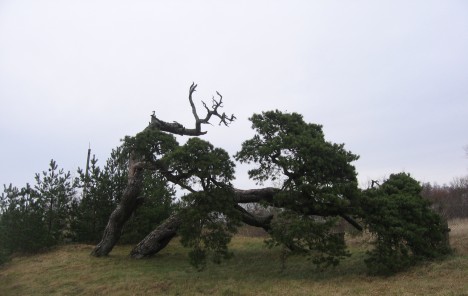
Storm Pine - trees
It has spited the severe gales for years. It is still alive even not being in the lee side. Every morning the pine sees off fishermen to the sea, but in the evenings it meets them at home.
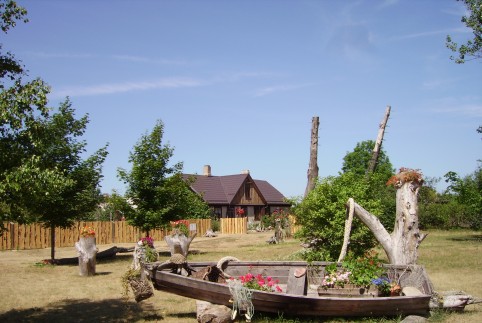
E.Šneiders Square
The square was orginally intended as a market place; it was used and called as such up to the 1930s. In the 1950s, the square was renamed Pioneer Square. In the beggining os the 1990s, the square was named after a teacher, a public figure and the founder of the plantings of the village- Ernests Šneiders (1892-1948). On 30 August 1992, on the occasion of the teacher's one hundredth anniversary, a memorial stone was placed at E. Senders Squre 2 where the teacher had lived and worked. The building that was built as a pharmacy was later used as the elementary school of Pāvilosta. Now it hosts the art school of Pāvilosta.
Wood carving class of the Liepāja Art Secondary School of the oldest fishermen houses is located, naturally fitting in with the scenery of the square. Only three such houses have survived until modern times at Pāvilosta.
In memory of the fishermen whose final resting- place is the seabed, lighthouse wasbuilt in the square in 2014 to serve as a cultural and historical landmark. since ancient times the lighthouse has served as a symbol of security, as a shelter in difficult times, showing the way to the shore and giving light.
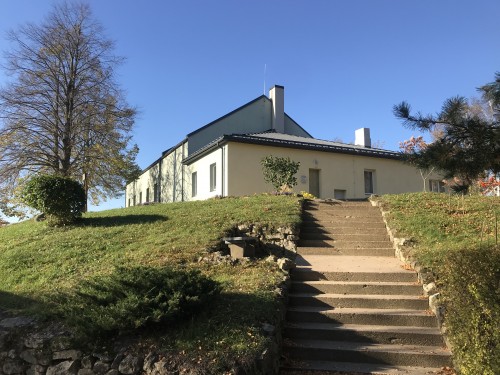
“Church Hill”
An archeological monument of national importance – a Stone Age settlement. The recreation centre of Pāvilosta is located in Church Hill. The building was built in 1909 as Pāvilosta Brothers parish preaching house. From 1948, the bulding has been hosting the house of cultural activities of the town of Pāvilosta. Renovation of building was finished in 2012.
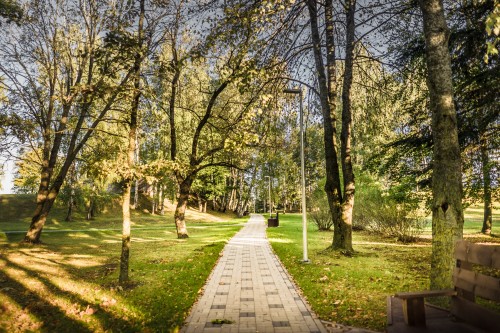
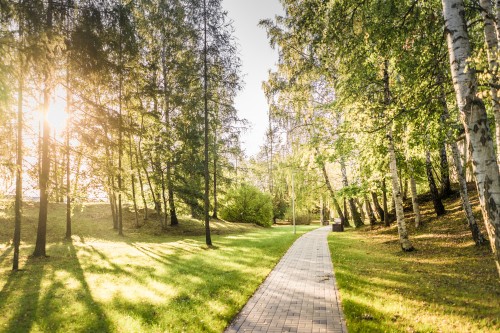
The Semi - Centennial Park
It is made in honour of semicentennial of the town of Pāvilosta.The first trees were planted theer by ateacher of thePāvilostaelementary school, Ernests Šneiders, and his school pupils in 1927. In May 1929, when Pāvilosta celebrated its 50th anniversary, the second president of the State of Latvia, Gustavs Zemgals, was among the guest of the celebrations; he planted an oak in the park.
Centennial Park
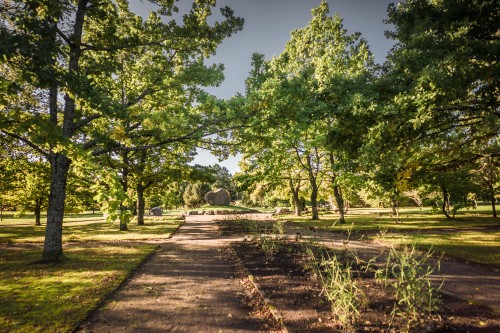
It was created in 1979 according to the draft developed by architect G. Lūsis- Grīnbergs.
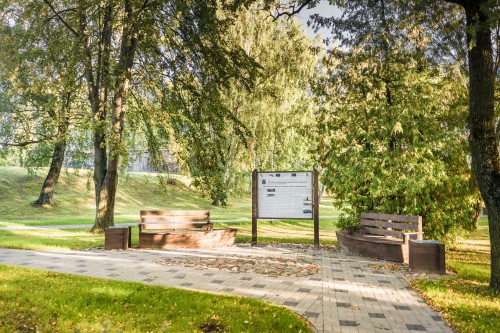
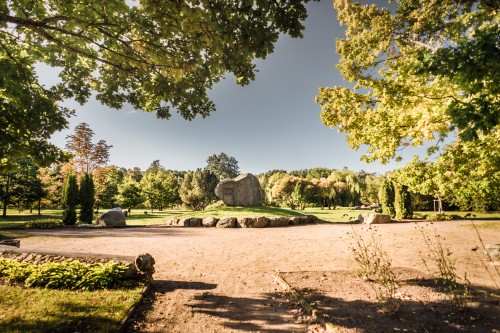
The hundredth anniversary stone is plantedin the centre of the park. the park's plants and paths were made by the population and guests of Pāvilosta under the guidance of the enthusiast and a tree and stone expert Jānis Ausmanis. There is a stone in memory of those who suffered in the repressions of 1941 and 1949 in the park. On the river bank in the territory of the park there is John's Hill with a mill stone in its centre. This hill is used as a marriage registration venue by numerous newlyweds from around Latvia. The artificially made hill represents the work of the person who created and tended for the park, Jānis Ausmanis. A lime tree, planted by former latvian president, Vaira Vīķe- Freiberga who visited the grey dune of Pāvilosta in 2007, is growing in the park. Each plant is special and has a story of its own. There is ring of lime trees and oaks planted by the honorary countrymen, a deuties' ash alley, a teachers' lime tree garden, etc.
The park of Upesmuiža
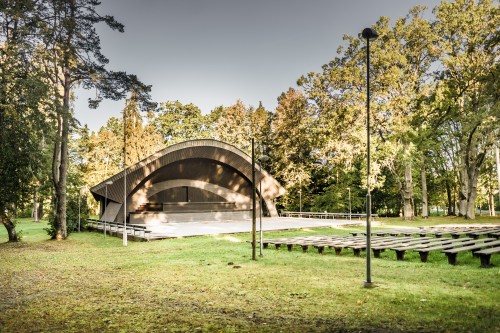
Upesmuiža Park the area of which is 7.5 ha is arranged around the former castle ensemble. The ancient, original stone stairs have remained in the park, as well as the former forestry building of the estate which was built around 1836. A stone bench has remained in the park since bygone days, perimeter of which is 5.55m. A story has been recorded about it (A.Grīnbergs, March 25, 2002): a falling tree killed the estate manager’s daughter in this place and afterwards the estate manager liked to stay in this place, therefore a bench was put in this place. The Great stone of Upesmuiža Park is located there which is a potential cult stone. It is 3.3m long, 2.9m wide and 1.5m high.
Pāvilosta Evangelical Lutheran Church
Brīvības iela 26, Pāvilosta
+371 29226273
(you are requested to register your visit in advance)
In 1930, more than 400 parishioners and 50 Sunday school students lived in Pāvilosta and the closest church was 7km far. On January 6, 1930, a decision was adopted in the meeting of Sakasleja parish council to build a church in Pāvilosta.
Services are held on the 1st,3rd and 5th Sunday at 11:00.
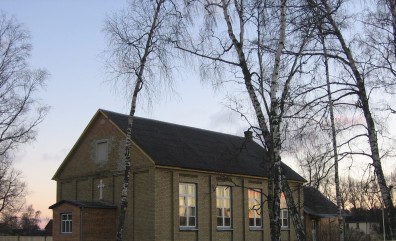
Baptist Church
Klusā iela 8, Pāvilosta
+371 63498351, +371 26158999, +371 27772133
(you are requested to register your visit in advance)
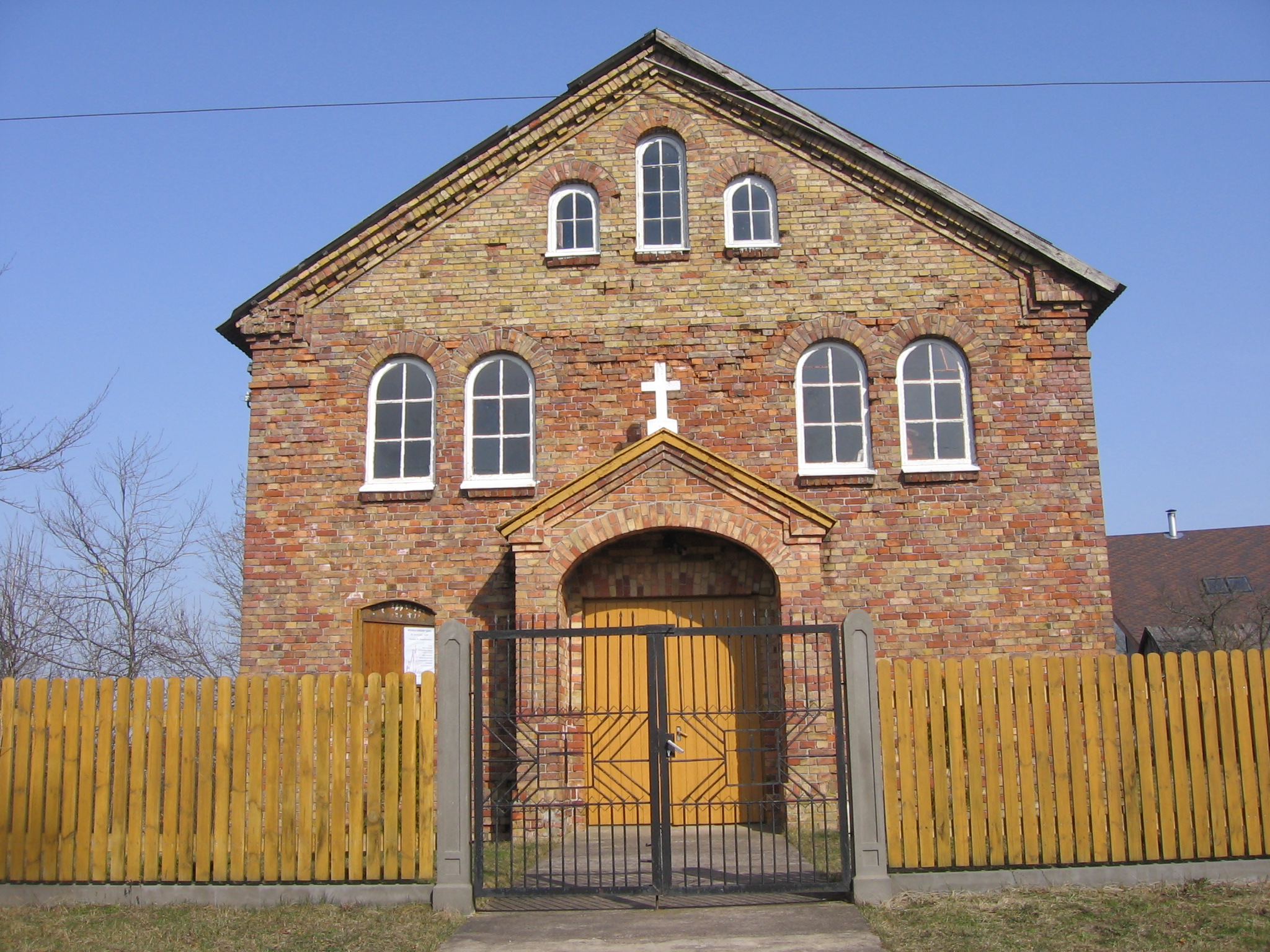
In 1897, Baron Otto Friedrich von Lilienfeld gave a permission to build a church and allocated a building plot from the land belonging to him. Construction work of the church was started in 1900, but on December 10, 1906, the 1st service was held in the newly-built church.
Services are held each Sunday at 11:00.
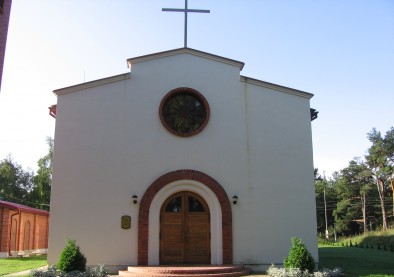
Holy Spirit Roman Catholic Church
Viršu iela 1, Pāvilosta
+371 63449990 (Priest)
(you are requested to register your visit in advance)
After the Second World War in the 50-ties of XX century more than 100 Catholic people were moved from Grīņi and Jūrkalne to Pāvilosta. On May 7, 1998, Catholic parish was established and therefore the possibility to build a Catholic church in Pāvilosta was provided.
The location for the church was selected by support and recommendation of Pāvilosta Council. Owing to the care of Latvian emigrant Bruno Danis living in Australia, organizer’s talent of Dean Vilhelms Lapelis, skills of the company workers and work of several people living in Pāvilosta, the new Holy Spirit Roman Catholic Church was built in 1999. It was dedicated on September 23, 2000.
Services are held on the 1st and 3rd Sunday at 14:00.
Tomb of Lithuanian soldiers
Seven Lithuanian soldiers rest here, who in 1945 served in the coastguard of the German army. They helped people to flee to Sweden in motor boats. On 21 January 1945 they were killed in the forests of Zaļkalns as traitors. They were shot by their fellow Lithuanian soldiers who were forced to do it..jpg)
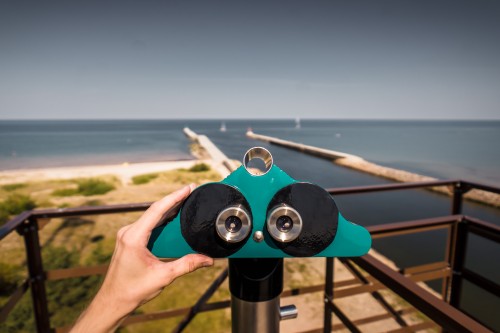
The former army tower near South Jetty
Working 01.10- 31.10.
Monday- Friday 10:00-19:00
Saturday, Sunday 10:00-16:00
Using binoculars, it is possible to observe both the sea and bird migration.
More information: +371 29121894, tic@pavilosta.lv
More information what you can visit find here:http://www.pavilosta.lv/en/Activities
.jpg)